Coating Technology
Advanced electroplating processes and surface treatment technologies engineered to deliver superior corrosion resistance for industrial fasteners in demanding environments.
We maintain in-house surface treatment capabilities and have established long-term partnerships with specialized plating facilities to ensure consistent quality, capacity flexibility, and technical support across all coating requirements.
Why Coating Matters
Corrosion is the primary failure mode for fasteners in automotive, energy storage, and industrial applications. Unprotected steel fasteners exposed to moisture, salt, and chemical environments degrade rapidly, compromising structural integrity and safety. Understanding the common causes of fastener corrosion helps inform coating selection decisions.
Effective coating systems provide a barrier layer that prevents direct contact between the base metal and corrosive agents. The performance of this barrier depends on coating composition, thickness uniformity, adhesion quality, and post-treatment processes. Nickel coatings protect fasteners by forming a dense barrier layer that prevents moisture and oxygen from reaching the base metal. (Learn more about how nickel coatings protect fasteners). When selecting nickel coatings, consider the difference between electroplated and electroless nickel for optimal performance.
For applications requiring extended service life—such as electric vehicle battery enclosures, outdoor equipment, and marine environments—coating selection directly impacts product reliability and total cost of ownership.
Our Coating Capabilities
Zinc Plating
- •Standard zinc electroplating for general-purpose corrosion protection
- •Typical salt spray performance: 240-480 hours (Neutral Salt Spray Test)
- •Cost-effective solution for indoor and mild outdoor applications
- •Available with hexavalent or trivalent chromium passivation
Zinc-Nickel Plating
- •Alloy coating containing 10-15% nickel for enhanced corrosion resistance
- •Typical salt spray performance: 720-1000+ hours (NSS)
- •Superior performance in automotive and energy storage applications
- •Compatible with trivalent chromium passivation (Cr3+)
- •Low hydrogen embrittlement risk for high-strength fasteners
Learn more about protective nickel coatings. For detailed comparison of nickel plating methods, see our guide on electroplated vs electroless nickel for fasteners. For corrosion resistant fasteners with zinc-nickel coating, see our product range.
These coating technologies are applied across different fastener solutions based on corrosion performance and service life requirements. Explore our fastener solutions.
Trivalent Chromium Passivation (Cr3+)
All zinc and zinc-nickel plated fasteners undergo trivalent chromium passivation to enhance corrosion resistance and provide a uniform surface appearance. This environmentally compliant process replaces hexavalent chromium (Cr6+) while maintaining performance standards.
- •RoHS compliant and environmentally safe
- •Forms a protective conversion layer on the coating surface
- •Improves salt spray performance by 20-30% compared to unpassivated coatings
- •Available in clear, blue, or black finish options
Salt Spray Testing & Standards
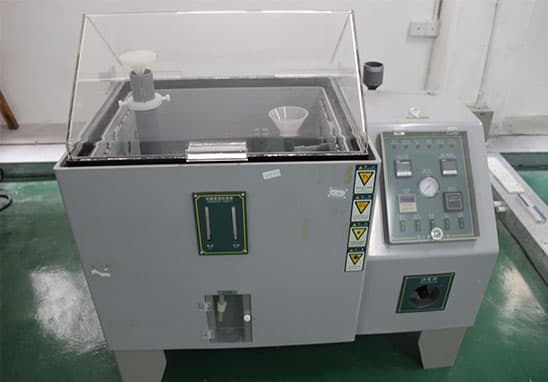
Neutral Salt Spray Test (NSS)
We conduct Neutral Salt Spray testing in accordance with ASTM B117 and ISO 9227 standards. Test specimens are exposed to a continuous salt fog environment (5% NaCl solution at 35°C) to simulate accelerated corrosion conditions.
Test results are reported as hours to first appearance of white rust (zinc corrosion) or red rust (base metal corrosion), depending on coating type and application requirements.
Testing Standards & Performance Ranges
ASTM B117
Standard Practice for Operating Salt Spray (Fog) Apparatus. Our testing procedures follow this established methodology for consistent, reproducible results.
ISO 9227
Corrosion Tests in Artificial Atmospheres - Salt Spray Tests. International standard ensuring compatibility with global quality requirements.
Typical Performance Ranges
- • Zinc plating: 240-480 hours NSS
- • Zinc-nickel plating: 720-1000+ hours NSS
- • Performance varies with coating thickness, substrate preparation, and environmental conditions
Typical Application Scenarios
Electric Vehicle Battery Enclosures
Zinc-nickel plated rivet nuts and fasteners provide long-term corrosion protection in battery enclosure assemblies where exposure to moisture and temperature cycling is common.
Recommended: Zinc-nickel plating with 720+ hours NSS
Energy Storage Systems
Outdoor battery storage containers and power systems require fasteners that maintain integrity under extended exposure to environmental conditions.
Recommended: Zinc-nickel plating with 720-1000+ hours NSS
Automotive Underbody Components
Fasteners in underbody and chassis applications face road salt, moisture, and debris. Coating selection directly impacts vehicle service life and warranty requirements.
Recommended: Zinc-nickel plating with 720+ hours NSS
Industrial Equipment
Manufacturing equipment, outdoor machinery, and industrial enclosures benefit from enhanced corrosion protection to reduce maintenance frequency.
Recommended: Zinc or zinc-nickel plating based on environment severity
Marine & Coastal Applications
High-salt environments require maximum corrosion resistance. Zinc-nickel coatings provide superior performance compared to standard zinc plating.
Recommended: Zinc-nickel plating with 1000+ hours NSS
Indoor & Controlled Environments
For applications with minimal exposure to moisture and corrosive agents, standard zinc plating provides adequate protection at lower cost.
Recommended: Zinc plating with 240-480 hours NSS
Manufacturing Capabilities
In-House Surface Treatment
Our manufacturing facility includes dedicated surface treatment capabilities, allowing for direct process control, reduced lead times, and integrated quality management from fastener production through final coating.
- •On-site surface preparation and pretreatment processes
- •Integrated quality control throughout the coating workflow
- •Reduced handling and transportation between production stages
- •Faster turnaround for standard coating requirements
Partner Plating Facilities
We maintain long-term strategic partnerships with specialized electroplating facilities that provide additional capacity, specialized processes, and advanced coating technologies beyond our in-house capabilities.
- •Established relationships ensure consistent quality and process standardization
- •Access to specialized coating processes and high-volume capacity
- •Shared quality standards and testing protocols across all facilities
- •Flexibility to scale production based on order volume and complexity
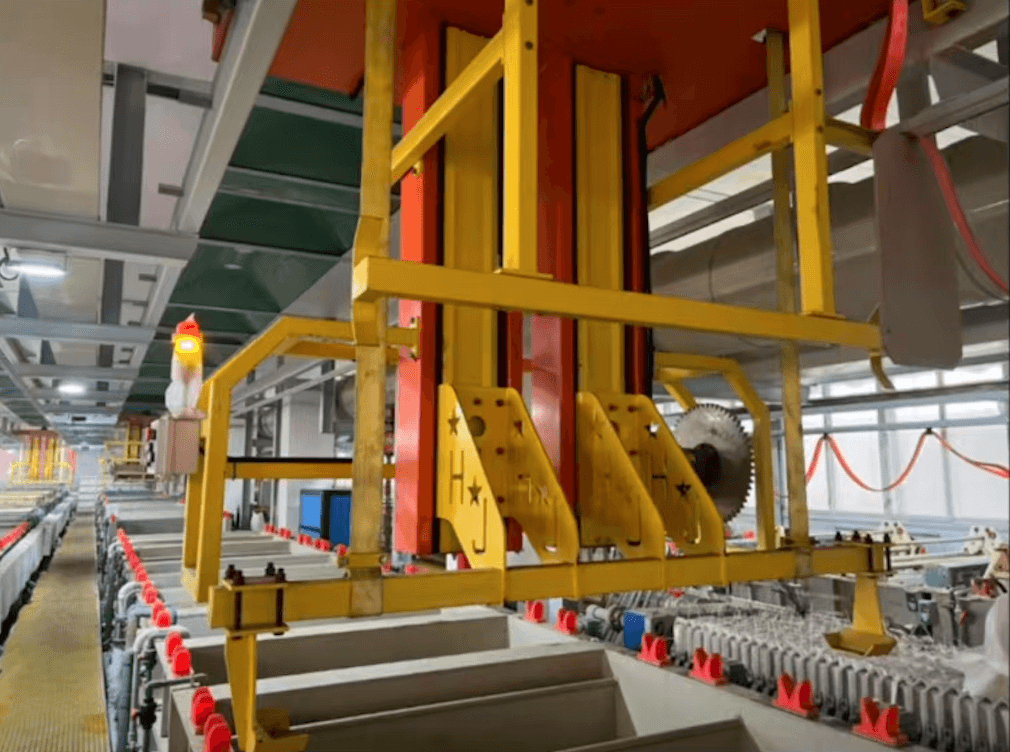
Automated Electroplating Line
Automated gantry system and processing tanks for consistent coating application. The system enables precise control of process parameters and uniform coating distribution across fastener batches.
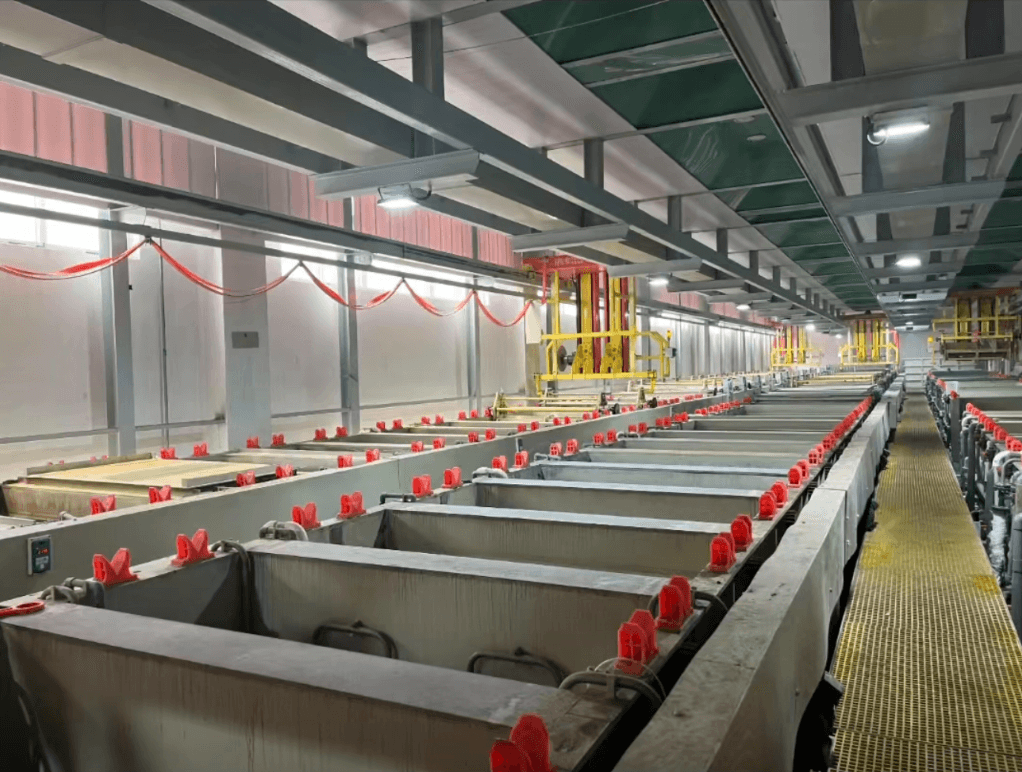
Barrel Electroplating System
Barrel plating equipment for efficient batch processing of small to medium-sized fasteners. This system ensures uniform coating coverage and optimal throughput for high-volume production.
Why Choose Our Coating Technology
Process Control & Consistency
- •Automated plating lines ensure uniform coating thickness across all surfaces
- •Precise control of bath chemistry and process parameters
- •Continuous monitoring and quality verification at each process stage
- •Standardized processes across in-house and partner facilities
Quality Assurance
- •In-house salt spray testing capabilities with ASTM B117 and ISO 9227 compliance
- •Coating thickness measurement using XRF and eddy current methods
- •Test certificates provided with shipments upon request
- •Unified quality standards applied across all coating sources
Technical Expertise
- •Experience with automotive-grade specifications and requirements
- •Understanding of material compatibility and hydrogen embrittlement considerations
- •Support for custom coating specifications and application-specific requirements
- •Collaborative technical support from both in-house and partner facilities
Environmental Compliance
- •Trivalent chromium passivation (Cr3+) meets RoHS and environmental regulations
- •Waste treatment and environmental management systems in place
- •Compliance with international standards and customer-specific requirements
- •Environmental certifications maintained across all coating facilities
Coating Technology Center
Coating Selection & Performance Analysis
For specific coating requirements, salt spray performance targets, or application-specific technical questions, our engineering team provides technical analysis, material compatibility assessment, and performance recommendations.